




Soundproofing vs Sound Dampening - What's the Difference?
Soundproofing blocks sound between rooms. Sound dampening controls echo inside one. Knowing the difference is the key to picking the right solution for your space.
If you have ever searched for soundproofing vs sound dampening, you have likely seen terms like soundproof wall panels, acoustic panels, and sound control used interchangeably. While these phrases are often grouped together online, they describe very different solutions.
Understanding the difference between soundproofing and sound dampening is the key to choosing the right approach for your space and setting realistic expectations for the results.
This guide explains what each term really means, when each solution is appropriate, and how felt wall tiles fit into sound control without confusion or hype.
What Is Soundproofing?

Soundproofing is the process of blocking sound from entering or leaving a space.
True soundproofing focuses on stopping sound waves from traveling through walls, ceilings, floors, doors, and windows. This typically requires construction methods that add mass, seal gaps, and isolate surfaces.
Soundproofing is most often used when noise is coming from an adjacent room or neighboring space, when privacy is required, or when external noise such as traffic or machinery must be blocked.
Because soundproofing relies on structural changes, soundproof wall panels alone are rarely sufficient to fully block noise.
What Is Sound Dampening?

Sound dampening, often referred to as acoustic treatment, focuses on controlling sound within a room rather than blocking it from passing through walls.
Instead of stopping sound transfer, sound-dampening products absorb reflected sound waves. This reduces echo, improves clarity, and makes spaces feel calmer and more comfortable.
Acoustic panels and felt wall tiles are designed for sound dampening, not soundproofing.
Why Soundproofing and Sound Dampening Are Often Confused
Many people search for soundproof wall panels when the real problem they are trying to solve is echo, distraction, or poor sound quality inside a room.
In most homes, offices, and classrooms, sound problems are caused by reflected sound, not sound traveling through walls. That is where sound-dampening panels are most effective and why sound control is often misunderstood.
What Felt Wall Tiles Are Designed to Do

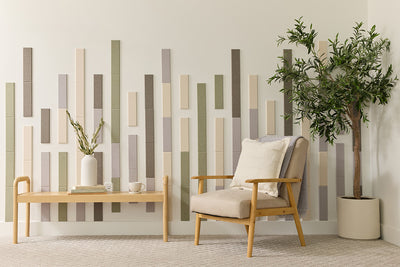
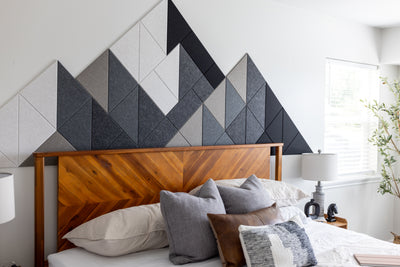
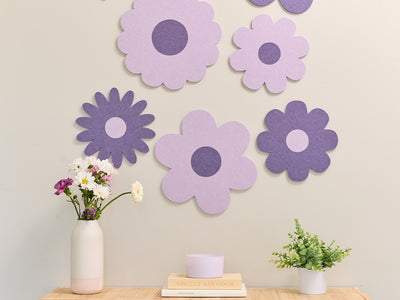
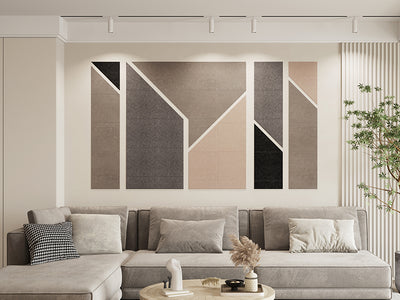
Felt wall tiles are designed to absorb sound reflections inside a space.
By reducing reflected sound energy, felt tiles help reduce echo, improve speech clarity, and lower noise fatigue. They are a decorative form of acoustic treatment that supports better sound control without permanent construction.
For those exploring decorative acoustic solutions, Felt Right offers a range of felt wall tile designs that balance sound comfort with visual impact.
Felt wall tiles do not block sound from entering or leaving a room and should not be used as a replacement for structural soundproofing.
Common Sound Problems and the Right Solution
Home Offices

If your home office feels loud or distracting due to echo or overlapping conversations, sound dampening is often the right solution. Acoustic felt panels help absorb reflections and support focus.
If noise is coming from another room, soundproofing solutions may be required instead.
Classrooms and Learning Spaces

Classrooms often struggle with echo and speech clarity. Acoustic wall panels help reduce reflected sound, making it easier for students to hear instructions and stay engaged.
In larger classrooms or multipurpose rooms, large-scale acoustic wall solutions can help manage sound across wider surfaces.
Open Offices and Shared Workspaces

In open offices, the primary issue is usually sound buildup rather than sound transfer. Sound-dampening panels help reduce distractions in shared workspaces without major construction.
Apartments and Shared Walls

If you hear neighbors through shared walls, sound dampening alone may not solve the problem. Structural soundproofing methods may be required, though felt wall tiles can still improve comfort within your own space.
How Much Sound Do Acoustic Panels Reduce?
Acoustic panels and felt wall tiles are measured by how much reflected sound they absorb, not how much sound they block.
They are most effective in the frequency range critical to human speech, which helps reduce echo and improve clarity. Results improve as coverage increases and panels are placed thoughtfully.
When Soundproofing Is the Better Choice
Soundproofing may be the right solution when:
-
Noise comes from adjacent rooms or outside the building
-
Privacy is essential
-
Loud, low-frequency noise must be blocked
In these cases, sound dampening panels can still support comfort but should be viewed as a complementary solution.
Choosing the Right Sound Control Approach
The most important step is identifying what type of sound problem you are trying to solve.
-
If the issue is echo or clarity, sound dampening with acoustic panels is usually the best place to start.
-
If the issue is sound traveling between spaces, soundproofing methods may be required.
Many environments benefit from using both approaches together.
For spaces that benefit from overhead treatment, acoustic panel solutions can also be applied to ceilings to improve sound control across the entire environment.
Getting Started With Felt Wall Tiles

If you are unsure how much sound treatment your space needs or where to place panels, the acoustics calculator can help estimate coverage based on room size and use.
Final Thoughts
Soundproofing and sound dampening solve different problems. Understanding that difference helps you make better decisions and avoid disappointment.
Felt wall tiles are designed to improve comfort and clarity by controlling sound reflections inside a space. When used for the right purpose, they can make a meaningful difference in how a room feels and functions.
Clear expectations lead to better outcomes, and better outcomes build trust.