




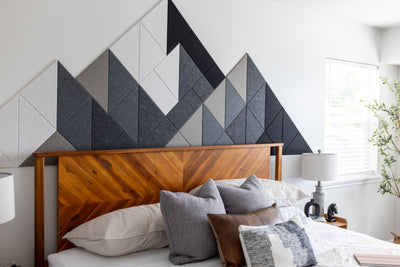




Non-Toxic Acoustic Panels: How Your Walls Affect Indoor Air Quality

You just finished renovating your office, restaurant, or clinic. The walls are painted, the furniture is in, and the space finally looks the way you pictured it.
Then you notice the smell. That "new office smell" often comes from chemicals off-gassing from fresh paint, adhesives, and new furnishings, and your team breathes it every day.
Here's the short answer: the materials you put on your walls affect your indoor air quality. If you're adding acoustic panels to fix noise and echo, choosing non-toxic, low-VOC panels lets you solve the sound problem without adding to the air problem.
In this guide, we'll cover why indoor air quality matters for your business, where indoor pollutants come from, and what to look for in acoustic panels that are better for the people in your space.
Why Indoor Air Quality Matters for Your Business
Indoor air is often dirtier than the air outside. The EPA's TEAM studies found that levels of about a dozen common organic pollutants were 2 to 5 times higher inside homes than outdoors.
That matters for your bottom line, not just your comfort. Your employees, customers, and patients spend hours inside your building every day.
Better Air, Better Thinking
Researchers at the Harvard T.H. Chan School of Public Health tested how office conditions affect decision-making. In their COGfx study, participants scored 61% higher on cognitive tests in low-VOC "green" conditions than in conventional office conditions, and 101% higher when ventilation was also improved.
The researchers found that VOCs and CO2 each had an independent effect on scores. In plain terms: what's in the air can affect how well your team thinks, plans, and responds under pressure.

What This Means for You
-
Employees: Cleaner air supports focus and better decisions.
-
Customers and guests: A space that smells fresh and feels calm makes a better first impression.
-
Sensitive groups: Schools, clinics, and childcare settings often face stricter expectations for low-emitting materials.
Where VOCs Come From in Commercial Spaces
VOCs (volatile organic compounds) are gases released from certain solids and liquids. According to the EPA, some can cause short- and long-term health effects, including eye, nose, and throat irritation, headaches, and nausea.
The EPA lists many common sources you'll find in a typical business:
-
Paints, solvents, and paint strippers
-
Cleaners and disinfectants
-
Building materials and furnishings
-
Office equipment such as copiers and printers
-
Glues and adhesives
Renovation is a high-risk window. The EPA notes that during and for several hours after activities like paint stripping, indoor levels can reach 1,000 times outdoor background levels.
You can't remove every source. But every material you choose for a build-out or refresh is a chance to keep new pollutants out. Wall treatments cover a lot of square footage, so they're a good place to start.
What Makes Felt Right Panels a Low-VOC Choice
Felt Right acoustic panels are made from one material: high-density PET felt. That simple recipe is what makes them a smart pick for indoor air quality.
Made From a Single, Simple Material
Every Felt Right tile is made from at least 50% recycled PET. PET is the same plastic used in water and soda bottles.
According to Felt Right, the recycled plastic is broken down and sterilized without harmful chemicals. And because the panel is felt all the way through, it isn't built around a fiberglass or mineral wool core.
Tested to Commercial Standards
Felt Right's acoustic panels, ceiling baffles, and dividers meet commercial performance standards for:
-
Indoor air quality (low VOC)
-
Acoustic performance
-
Durability
-
ASTM E-84 Class A fire rating
For a business owner, that last point matters as much as the first. A Class A rating is the top classification under the ASTM E-84 surface-burning test.
Sustainable, Too
Every Felt Right 4' x 8' sheet contains the equivalent of about 128 recycled water bottles.
Want to go deeper on the material? Read our guide to eco-friendly felt materials.
Installation: Don't Forget the Adhesive
Here's a detail many buyers miss: the panel isn't the only thing going on your wall. The EPA lists glues and adhesives among common VOC sources.
How you install Felt Right depends on the product:
-
Standard tiles ship with removable adhesive tabs, with commercial-grade tabs available for a stronger, semi-permanent bond.
-
4' x 8' Commercial Felt Sheets don't include tabs. Felt Right recommends hot glue plus a construction adhesive.
-
Ceiling beams clip into an ACT grid or drill into a drywall ceiling.
Tips for a Cleaner-Air Install
-
Ask your contractor to choose a low-VOC construction adhesive when one is needed.
-
Follow the adhesive's label directions for ventilation and cure time.
-
Increase fresh air during and after installation, as the EPA recommends when using VOC-emitting products.
-
Schedule installs after hours or before move-in when you can.
Better Indoor Air Quality Can Look Good, Too
Healthier materials shouldn't force you to compromise on design. Felt Right offers a curated palette of 42 colors, engraved patterns, 3D shapes, and custom cuts.
That means you can fit acoustic panels into your design plan, instead of changing your plan to fit the panels.
Match the Product to Your Noise Problem
NRC (Noise Reduction Coefficient) tells you how much sound a material absorbs. An NRC of 0.35 absorbs roughly 35% of the sound that hits it.
|
Felt Right product |
NRC |
|---|---|
|
0.85–1.10 |
|
|
Ceiling baffles (flat clouds, 3D clouds, blades, beams) |
0.60–1.05 |
|
0.85 |
|
|
0.65 |
|
|
0.55 |
|
|
0.35 |
For busy, echo-prone spaces like restaurants and open offices, ceiling baffles and thicker panels do the heavy lifting. Wall tiles work well for accent walls, meeting rooms, and smaller spaces.
Make It Your Brand
Felt Right also creates custom logo panels and branded acoustic installations. The felt is pinnable too, so a wall can double as a display board.
A Real Example
Urban Sailor Coffee in Park City, Utah, installed Felt Right acoustic beam baffles to cut noise and echo. Customers noticed the calmer atmosphere right away.
A calmer space is part of a healthier space. Felt Right designs its acoustic solutions with mental wellness in mind.
Checklist: How to Choose Non-Toxic Acoustic Panels
Use these questions when you compare acoustic panels for your business:
-
What is the panel made of? A single, simple material is easier to evaluate than a layered panel with cores, binders, and fabric wraps.
-
Does the manufacturer state it meets low-VOC indoor air quality standards? Ask for documentation if your project has specific requirements.
-
What is the fire rating? Look for ASTM E-84 Class A for commercial interiors.
-
What's the NRC? Match the rating to the size and noise level of your space.
-
How does it install, and with what? Account for any adhesive, and choose low-VOC options where you can.
-
Does it fit your design? Colors, shapes, and custom options keep you from compromising on the look.
-
What's the warranty? Felt Right stands behind its products with a five-year warranty.
Frequently Asked Questions
Do acoustic panels affect indoor air quality?
They can. Like any building material or furnishing, panels and the adhesives used to install them can release VOCs. Choosing low-VOC panels and low-VOC installation products helps keep new pollutants out of your space.
What are Felt Right acoustic panels made of?
Felt Right panels are made from high-density PET felt with at least 50% recycled content, mostly from single-use water bottles.
Are Felt Right panels fire rated?
Yes. Felt Right's acoustic panels, ceiling baffles, and dividers meet the ASTM E-84 Class A fire rating.
Can Felt Right panels be used in commercial spaces?
Yes. Felt Right offers commercial products like 4' x 8' felt sheets, ceiling baffles, and 3D boxes, plus a Trade Program for designers, contractors, and trade professionals.
Do acoustic panels clean the air?
No. Acoustic panels absorb sound; they don't filter air. The indoor air quality benefit of a low-VOC panel is that it avoids adding pollutants, not that it removes them. Ventilation and filtration remain your main tools for cleaner air.
Get Quieter, Healthier Spaces for Your Business

You don't have to choose between good acoustics, good design, and good air. Felt Right panels give you all three.
Here's how to get started:
-
Book a free acoustic assessment. Felt Right offers no-obligation acoustic assessments with a tailored design plan for your space.
-
Order samples. See the colors and feel the texture before you commit.
-
Talk to the design team. Email design@feltright.com with your project dimensions, photos, and any logos you want to feature.
Ready to make your space quieter and healthier? Schedule your free acoustic assessment today.